Dice Tac Toe
- 4.7
- Rating
- 10.00K
- Installs
- Free
- Price
 Analysis by App-foxy
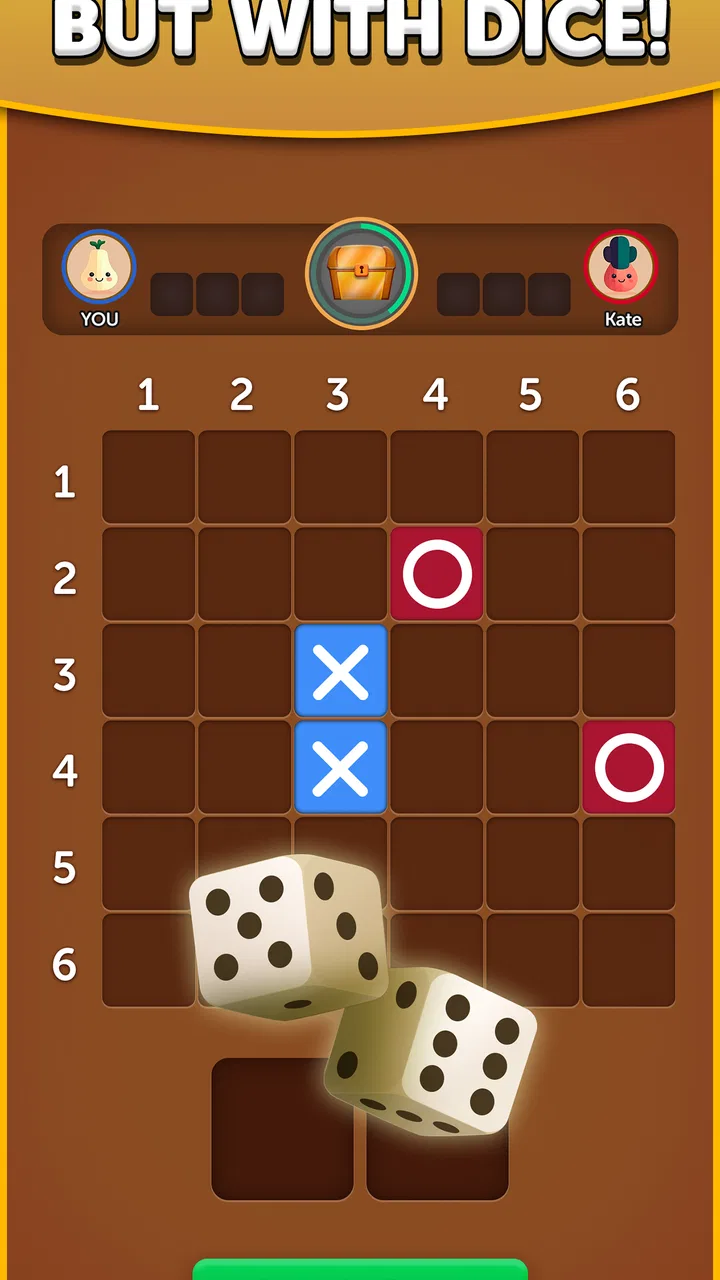
I went into Dice Tac Toe expecting a quick variation on the familiar three-in-a-row game, and that is exactly where its appeal starts. It keeps the simple board-game idea easy to understand, then adds dice to make each move less predictable. Instead of relying only on a fixed pattern and careful placement, I have to react to what the roll gives me, choose a useful position, and think about how that choice affects the other players. The result feels more active than ordinary Tic Tac Toe without becoming difficult to learn.
That balance makes it a natural fit for short breaks, casual local play, or anyone who likes board games that can be explained in a minute. It is free to download, aimed at Everyone, and works on Android devices running version 7.0 or later. FunCraft Games is the developer behind it, and the current version is 1.2.25661. Those details matter because this is not presented as a complicated strategy title that demands a modern phone or a long tutorial. I can pick it up quickly, play a few rounds, and put it away without feeling that I have started a major time commitment.
How the current game feels in everyday play
The central loop is straightforward: roll, decide where the result is most useful, and try to outthink the rivals sharing the board. That extra roll changes the mood of every turn. In standard Tic Tac Toe, the available choices are visible and the strongest move is often easy to identify once both players understand the basics. Here, the roll introduces a small interruption to that certainty. I still need to recognize threats and opportunities, but I also have to work with the situation the game presents.
You May Also Like

 AccuWeather: Weather Radar
AccuWeather Review: A Quick, Clear Forecast for Everyday Decisions
For everyday plans, the best forecast is the one you can understand quickly. AccuWeather makes rain timing, radar, and local conditions easy to act on, with a few trade-offs.

 Hill Climb Racing
Why Hill Climb Racing Still Turns Crashes Into One More Run
A tiny car, a bumpy hill and one more upgrade: Hill Climb Racing keeps resurfacing because its simple chaos makes every near-miss feel personal.

 AliExpress - Shopping App
AliExpress Makes Global Shopping Feel Personal, but Shoppers Bear the Risk
AliExpress turns a global marketplace into a pocket-sized discovery engine. Its reach is useful, its shopping loop compelling, and its trade-offs easy to miss.

 Lords Mobile: Kingdom Wars
Lords Mobile Is a Kingdom-Building Routine, Not a Quick Match
A case-by-case verdict on the building, battles, device demands, and social commitments that make Lords Mobile rewarding for some players and exhausting for others.

 PDF Scanner app - TapScanner
TapScanner Makes Paperwork Easier to Capture, Check, and Share
TapScanner makes scanning with a phone feel less like a rescue operation and more like a dependable step in getting work done. Its capture tools are useful, though not flawless.

 Block Blast!
 Shows How Much a Puzzle Game Can Leave Out
A quiet grid game shows why puzzle players increasingly value instant clarity, repeatable skill and low-pressure play—and where the genre still needs to catch up.
More From Our News Desk
View All News


That makes each round feel less like a solved puzzle and more like a compact board-game contest. A good player can still make better decisions, but a poor roll or an awkward position can force a change of plan. I like that tension because it gives casual players a chance to stay involved. Someone who is not familiar with strategy games can understand the immediate objective, while a more experienced player can focus on timing, blocking, and creating pressure.
The game is especially suitable for people who enjoy short sessions rather than long campaigns. I would use it when waiting for an appointment, passing time with a friend, or looking for something light after a demanding day. It does not ask me to remember a large set of rules or manage a complicated collection of resources. That simplicity is a strength, but it also defines the audience. Players looking for a deep board-game system with extensive progression may find the core idea too narrow.
One practical advantage is how easy it is to introduce to another person. I do not need to explain a long chain of exceptions before the first round begins. I can describe the familiar goal, explain the role of the dice, and let the new player learn the finer decisions by playing. For a family setting, that low barrier is valuable. The Everyone content rating also makes it a reasonable choice for mixed-age casual play, provided the people involved are comfortable with the normal ups and downs of a competitive game.
The dice add uncertainty, not just decoration
The most important design choice is that the dice are part of the decision-making rather than a visual extra. A roll can change which spaces deserve attention and can prevent me from following the same opening routine every time. I have to look at the board again instead of assuming that the previous round’s plan still applies. That creates a useful habit: I check immediate threats first, then consider whether the roll gives me a chance to build my own line.
My best tip is not to chase an attractive move simply because it looks active. In a dice-based version of a familiar game, the obvious opportunity may distract me from a rival’s nearly completed line. I get better results when I treat defense as part of the turn rather than as something to consider only after planning an attack. This is a small adjustment, but it makes the game feel more thoughtful and reduces the frustration of losing because I focused on the wrong part of the board.
A second useful approach is to think in terms of future flexibility. When several positions appear available, I prefer a move that leaves more than one possible follow-up instead of one that works only if the next roll is favorable. That does not remove the luck factor, but it helps me make the most of uncertain turns. Players who approach every round as a race toward one immediate line may miss the value of keeping alternatives open.
What changes compared with ordinary Tic Tac Toe
Traditional Tic Tac Toe is almost entirely about visible information. Both players can see the board, understand the legal choices, and calculate the consequences. Dice Tac Toe keeps that recognizable structure but makes the path to a winning position less predictable. The comparison is useful because it explains both the game’s attraction and its limitation: it is more surprising than the classic version, but it may feel less purely skill-based.
If I want a clean logic exercise where strong play can lead to a draw or a carefully forced result, I would choose the usual version instead. It is better for studying patterns, teaching basic planning, or settling into a completely deterministic routine. If I want something friendlier for a group with mixed experience, the dice variation is more inviting. A new player is not facing a perfectly rehearsed opponent under exactly the same conditions every time.
It also sits somewhere between a classic pencil-and-paper game and a more elaborate digital board game. It has enough variation to make repeated rounds feel different, but the basic concept remains compact. That makes it easier to recommend than a large strategy title when the group wants immediate action. On the other hand, players who expect many boards, deep customization, or a long-term campaign should choose a broader board-game app instead.
Small habits that make rounds more enjoyable
I find it helps to separate the game into three quick checks on every turn. First, I look for an immediate way a rival can complete a line. Second, I examine whether my roll enables a move that creates more than one threat. Third, I consider whether the chosen space leaves me with useful options later. This routine is simple enough for beginners, but it also prevents experienced players from making careless moves during a fast session.
Another tip is to avoid judging the game by one unlucky round. Dice naturally create swings, and a single result can make a position look much better or worse than it did moments earlier. I enjoy it more when I treat a session as several small contests rather than expecting every outcome to reflect perfect skill. That mindset is particularly helpful when playing with children or friends who are new to board games.
For a relaxed group session, I would also keep the first few rounds informal. Explaining every possible tactic before anyone has touched the board would make a simple game feel more complicated than it is. Letting players discover how the roll affects their choices gives them a clearer understanding of the trade-off between immediate moves and flexible ones. After that, advice becomes more useful because everyone has seen the basic rhythm firsthand.
What the current release means for different players
The release information places the game at February 27, 2026, with the current build listed as 1.2.25661. I read that as a sign that the product is being presented in an early stage of its life rather than as a long-established board-game platform. The version number gives existing users a clear reference point when checking whether they are playing the current build, while the release timing suggests that expectations should remain grounded in the focused concept that is available now.
For a new player, the practical takeaway is simple: the current experience should be judged as a compact dice-driven board game, not against the feature list of a large multiplayer or strategy collection. For someone already playing, an update can be worth installing because it keeps the app aligned with the latest available build. I would still evaluate each new version by how smoothly rounds start, how clear the board remains, and whether the dice create interesting decisions rather than merely slowing the pace.
The game has an average rating of 4.7 from around a thousand ratings, and it has more than ten thousand installs. Those figures suggest that the concept is connecting with a modest but positive audience. I would not treat the rating as proof that every player will enjoy it, because a short luck-influenced game can divide people according to their taste. Still, the response indicates that the basic idea is understandable and appealing to many of the people who have tried it.
There are also 86 written reviews, which is enough to show that players have taken the time to comment rather than simply install and leave. I pay more attention to the pattern behind written feedback than to the headline score. In this case, the important question for a potential user is whether they enjoy quick board contests where uncertainty is part of the fun. If the answer is yes, the positive reception is encouraging. If the answer is no, a high rating will not change the fact that the dice may feel like an unwanted interruption.
Who should try it, and who should skip it
I would recommend it to casual board-game fans, families wanting an easy digital activity, and players who like familiar rules with a small twist. It is also a good option for someone who finds classic Tic Tac Toe too predictable but does not want to learn a complex strategy game. The short-turn structure makes it approachable, and the roll gives less experienced players a chance to remain competitive while they learn how to read the board.
I would be more cautious about recommending it to players who dislike random outcomes in competitive games. If you want every result to come from planning alone, this format may feel unfair even when the rules are working as intended. It is also not my first choice for someone seeking a large solo experience, extensive progression, or a game that can occupy an entire evening. The appeal comes from repeating a small idea with changing decisions, not from steadily unlocking a huge amount of content.
That distinction is important when deciding whether to spend money inside the app. The game itself is free, while in-app purchases range from $0.49 to $49.99 per item. I would start with the free experience and decide whether the core rounds hold my attention before considering any purchase. For this kind of compact board game, buying extras only makes sense if they add value to the way I already play; the basic concept needs to be enjoyable on its own first.
Remaining friction and sensible expectations
The biggest trade-off is built into the design. Dice make the game more approachable and replayable, but they also reduce the feeling of complete control. A carefully planned turn can be followed by an unhelpful result, and a rival who seemed behind can suddenly receive the opportunity needed to recover. I see that as the intended character of the game, not a flaw by itself, but it is still the first thing I would mention to a strategy purist.
The other limitation is scope. A focused board game can be satisfying precisely because it avoids clutter, yet the same focus may become repetitive for players who need constant novelty. I would use it in short bursts and judge it on whether I still want another round after a few games. If I start wishing for a deeper ruleset or a wider range of challenges, that is the point where a traditional strategy board game becomes a better fit.
There is also a social trade-off. The game is easy to explain, but its enjoyment depends on the people playing and on how they respond to luck. With a relaxed friend, the random element can create funny reversals and close finishes. With someone who treats every roll as a serious competitive setback, the same feature can make the session tense for the wrong reasons. Choosing the right opponent matters more here than it would in a purely deterministic puzzle.
What I would watch as the game develops
Because the listed release is recent and the current version is clearly identified, I would watch how FunCraft Games shapes the experience over time. The most meaningful progress would be improvements that preserve the quick rules while making repeated matches feel fresh. I would value clearer feedback around turns, a consistently readable board, and changes that help new players understand why a move was strong or risky without turning the game into a tutorial-heavy production.
I would also watch the balance between accessibility and competition. The dice should create variety without making thoughtful play feel pointless. If future changes make the outcomes too dependent on luck, experienced players may lose interest. If changes make the game too rigid, beginners may lose the welcoming quality that currently separates it from a strict classic Tic Tac Toe match. The best direction would keep uncertainty meaningful while rewarding players who pay attention.
For existing users, my advice is to keep expectations practical: enjoy the current compact format, note which kinds of opponents and session lengths work best for you, and reassess after updates rather than assuming every new version will transform the game. For new users, the safest workflow is to install the free game, play several short rounds with someone who enjoys casual competition, and decide whether the dice add excitement or annoyance. That test tells you more than the rating alone.
Overall, I think Dice Tac Toe succeeds because it changes the familiar game at exactly one important point. The board remains understandable, but the dice force me to reconsider my plan on every turn. I would recommend it as a light, accessible board game for quick sessions, especially when the players enjoy a little uncertainty. I would not present it as a replacement for deep strategy games or as a perfect choice for people who want complete control. Its best quality is its modest ambition: it takes a simple idea, adds a clear source of tension, and gives me a reason to play one more round.
FAQs for Dice Tac Toe
01What is Dice Tac Toe and how is it played?
Dice Tac Toe is an innovative twist on the classic Tic Tac Toe game that incorporates dice rolls to add an element of chance and strategy. Players alternate turns rolling dice and placing the resulting numbers on a 3x3 grid. The goal is to align three numbers in a row, column, or diagonal, similar to traditional Tic Tac Toe. The combination of strategy and luck makes each game exciting and unpredictable.
02Is Dice Tac Toe suitable for all ages?
Yes, Dice Tac Toe is designed to be family-friendly and is suitable for players of all ages. The simple rules make it easy for children to understand, while the strategic element can engage older players. It's a great way for families to enjoy some fun and competitive gameplay together, fostering strategic thinking and quick decision-making skills.
03Does Dice Tac Toe require an internet connection?
Dice Tac Toe is primarily an offline game, so it does not require an internet connection to play. This makes it perfect for enjoying during travel or in areas with limited connectivity. However, if the app includes any online multiplayer features or leaderboards, an internet connection may be needed for those specific functions.
04Are there any in-app purchases or ads in Dice Tac Toe?
The presence of in-app purchases or ads in Dice Tac Toe depends on the version of the app you download. Some versions offer a free-to-play model supported by ads or offer additional features and customizations through in-app purchases. It's advisable to check the app description and reviews to understand if these elements are present and how they might affect your gaming experience.
05What devices are compatible with Dice Tac Toe?
Dice Tac Toe is available for both Android and iOS platforms, making it compatible with a wide range of smartphones and tablets. Ensure that your device meets the minimum system requirements specified in the app store listings to guarantee smooth performance. Regular updates may be required to maintain compatibility with newer operating system versions.
Pros
- Unique blend of dice and tic-tac-toe gameplay.
- Simple interface with intuitive controls.
- Multiplayer mode for competitive fun.
- Quick matches perfect for short breaks.
- Engaging for both kids and adults.
Cons
- Limited game modes available.
- No offline single-player option.
- Graphics are quite basic.
- Occasional in-app ads can be intrusive.
- Lack of tutorial for new players.

Dice Tac Toe
Gallery